Isaiah 43:11 – There is Only ONE Savior

Isaiah 43:11

Isaiah 43:11
I, only I, am the LORD, And there is no savior besides Me.

This verse from Isaiah has long stood as a clear and unwavering declaration of who God is. It was one of those verses committed to memory early on, not just for its rhythm or simplicity, but for its weight. The word “Savior” often brings to mind the image of Jesus on the cross, offering personal redemption and eternal life. That understanding is central to faith. Yet in this passage, the term carries a broader meaning. It speaks to God’s role in rescuing a nation, in preserving a people, in intervening when all other help fails.

Israel has always been at the heart of this promise. The history of Scripture shows God stepping in time and again to deliver, protect, and restore. That pattern continues. The need for divine intervention in Israel’s current situation is as urgent as ever. The threats are real, the divisions are deep, and the hope for peace often feels fragile. Yet the promise remains. God has not changed. He still saves.

There is also a sense that this promise extends beyond Israel. America, too, has experienced moments of divine mercy. The founding principles, the awakenings, the seasons of revival all point to a relationship that has been marked by grace. But something has shifted. The culture has grown restless. The nation has looked in many directions for answers, often ignoring the one source of true help. The result has been confusion, division, and a loss of moral clarity.

Still, there are signs of renewal. Some leaders are beginning to speak more openly about faith. Public moments, like memorials and gatherings, are starting to reflect a deeper hunger for truth. The legacy of voices like Billy Graham continues to echo, reminding the nation to turn back to God. His daily prayers for revival were not just personal—they were intercessions for a country in need of healing. After his passing, many others, including me, have picked up that task. Prayer must remain the response. Not just for personal devotion, but for national protection and spiritual awakening. The only Savior is still the same. No other source can offer what He does. That truth calls for humility, for repentance, and for hope. Whether in quiet moments or public witness, the direction must be clear. Look to the One who saves. There is no other.

How do the 4 views on Revelation Affect our view of Matthew 16:28?

When approaching the book of Revelation, it’s important to recognize that readers often interpret its message through one of four major frameworks: Progressive Dispensationalism, Partial Preterism, the Historist view, and the Idyllic view. Each offers a distinct lens that shapes how the text is understood.

Progressive Dispensationalism sees Revelation as a roadmap of future events, with Christ’s kingdom already inaugurated but awaiting full realization. Partial Preterism interprets much of Revelation as fulfilled in the first century, especially in the fall of Jerusalem and the judgment on unbelieving Israel. The Historist view reads Revelation as a sweeping timeline of church history, with its symbols unfolding gradually across centuries. The Idyllic view, sometimes called the spiritual or symbolic approach, emphasizes timeless truths and recurring patterns rather than specific historical fulfillments.

These perspectives influence how a reader engages with John’s visions—whether as prophecy yet to unfold, history already fulfilled, a chronicle of spiritual struggle, or a poetic portrayal of divine victory. Understanding these views helps us appreciate the richness of Revelation and encourages thoughtful reflection as we explore its meaning.

But it is not only John’s work that is affected. The words of Christ are also viewed through the lens of the reader’s preference.

Matthew 16:28 presents a striking statement from Jesus, promising that some standing with Him would not taste death before seeing the Son of Man coming in His kingdom. This verse concludes a powerful sequence in chapter 16, where Jesus predicts His suffering, calls His followers to take up their cross, and speaks of future glory. The very next chapter, Matthew 17, opens with the Transfiguration, where Jesus is revealed in radiant glory before Peter, James, and John. Many scholars see this event as a partial fulfillment of the promise in 16:28, offering a preview of the kingdom through Christ’s glorified presence. The connection between the two chapters suggests that Jesus was pointing to a near-term revelation of His divine authority, not necessarily the final return.

From the perspective of Progressive Dispensationalism, Matthew 16:28 is often interpreted as referring to the Transfiguration as a foretaste of the future kingdom. This view holds that the kingdom was inaugurated in Christ’s first coming but awaits full realization in the future. The Transfiguration, then, serves as a visible confirmation of Jesus’ messianic identity and the reality of the kingdom already at work. Those who witnessed it saw the King in glory, validating the promise that some would see the kingdom before death, even though its complete fulfillment lies ahead.

Partial Preterism approaches this verse differently. It sees the “coming of the Son of Man” as referring to events within the first century, particularly the destruction of Jerusalem in AD 70. In this view, Jesus was speaking of His vindication and judgment against unbelieving Israel. The phrase “some standing here” is taken literally, pointing to the disciples who lived to see these events unfold. The Transfiguration may still be seen as a symbolic preview, but the primary fulfillment is historical and tied to covenantal transition.

The Historist view interprets Matthew 16:28 as part of a broader prophetic timeline. Rather than focusing on a single event, this perspective sees the “coming” as unfolding through church history, with various milestones representing Christ’s progressive triumph. Some within the early church may have witnessed the initial stages of this unfolding kingdom, such as Pentecost or the spread of the gospel, but the full scope is seen as ongoing. The verse is not tied to one moment but to a series of developments.

Lastly, the Idyllic view treats this passage as a theological affirmation rather than a specific prediction. It emphasizes the spiritual reality of Christ’s reign and the believer’s experience of His kingdom through faith. The Transfiguration, in this framework, is a symbolic representation of divine glory accessible to those who walk closely with Christ. The promise in 16:28 is fulfilled not through historical markers but through spiritual insight and communion with the risen Lord.

Matthew 16:28 invites reflection, but its meaning shifts depending on the lens through which it is read. Each interpretive view—Progressive Dispensationalism, Partial Preterism, the Historist approach, and the Idyllic perspective—offers a distinct context that shapes how the verse is understood. Whether one sees it as a preview of glory, a historical fulfillment, a prophetic unfolding, or a spiritual truth, the view held will guide how the passage is experienced. This diversity reminds me that scripture often speaks on multiple levels, and careful study helps us see more clearly what God may be revealing.

Should we celebrate the death of others?

I was recently asked if we should celebrate the death of others, especially if they are considered evil, on the order of Stalin, Mao, Hitler, and similar evil figures from history?

This is a great question.

No. I don’t believe it is EVER justified in celebrating the death of someone else. I also believe that this position enjoys Scriptural support.

It is pretty obvious that scripture declares clearly that “judgment belongs to God”, not to us. In Romans 14:12, Paul reminds believers that each person will give an account of themselves to God. James 4:12 goes further, stating that there is only one Lawgiver and Judge—the one who is able to save and destroy, and then asks, “Who are you to judge your neighbor?” These verses reinforce the idea that final judgment is God’s domain, not ours.

Proverbs 24:17 cautions against rejoicing when an enemy falls, and warns not to let your heart be glad when they stumble. That principle reflects a deeper truth: even when justice is served, gloating over someone’s demise is not aligned with God’s heart. Scripture leans heavily toward mourning with compassion rather than rejoicing over loss. Ezekiel 33:11 reveals God’s own posture, saying He takes no pleasure in the death of the wicked, but rather desires that they turn and live. This shows that even divine judgment is rooted in mercy and the hope of repentance.

The Psalms and the teachings of Jesus also emphasize mercy over vengeance, and compassion over condemnation. Matthew 5:4 blesses those who mourn, and 2 Corinthians 1:3–4 describes God as the Father of compassion who comforts us in all our troubles. These passages suggest that grief, even over the death of someone who caused harm, should be met with humility and reflection, not celebration.

Christians are tasked with the biblical call to humility, mercy, and reverence for life. Holding space for sorrow, even in complex situations, reflects the heart of Christ more than any triumphalism ever could.

David mourned for Saul, the one who was trying to kill him. We should follow that example, I think.

Is the “WALUM OLUM” Real?

I came across an interesting video clip on Instagram that led me to poke around a bit. What I found was pretty interesting. I am intentionally avoiding to come to a conclusion, but I do tend to lean towards a particular bent…. but I will leave it up to you to decide for yourself.

THE WALUM OLUM

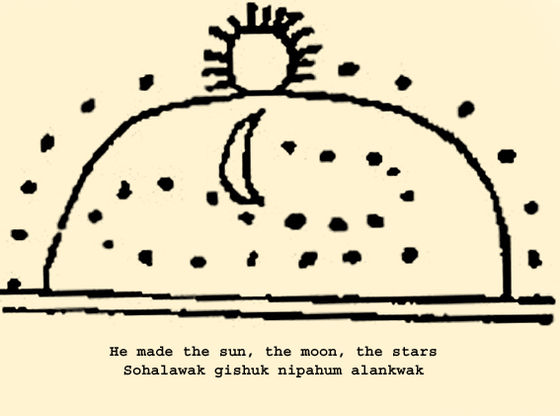
The Walam Olum, also known as the Red Record, is a controversial text that claims to be a historical and mythological account of the Lenape (Delaware) Native American tribe. It was first published in the 1830s by Constantine Samuel Rafinesque, who said he translated it from pictographs inscribed on wooden tablets given to him by a mysterious source.

For decades, some scholars have treated it as a genuine Native American document, despite its murky origins and questionable linguistic accuracy. However, by the late 20th century, deeper investigations, especially by researcher David Oestreicher, revealed substantial evidence that Rafinesque likely fabricated the entire text. Oestreicher examined Rafinesque’s papers and consulted with Lenape elders, concluding that the Walam Olum was not an authentic tribal record but rather a constructed narrative that reflected 19th-century ideas and biases.

While the Walam Olum may have historical significance as a cultural artifact of its time, it is no longer considered a legitimate or authentic record of Lenape tradition by modern scholars and Native communities.

IS THIS A “SCIENCE-BASED OBJECTION”?

While the majority of scholars today consider the Walam Olum to be a fabrication, a small number of voices have offered arguments in favor of its authenticity. However, these are generally viewed with skepticism by mainstream historians and linguists.

Cultural Parallels with Biblical Narratives

Some researchers and faith-based groups have pointed out that the Walam Olum contains striking thematic parallels with the biblical account in Genesis. These include:

  • A single divine Creator who forms the world.
  • A serpent figure introducing evil and corruption.
  • A great flood that resets humanity.
  • Migrations and genealogies that resemble post-Babel dispersion.

Supporters argue that these similarities suggest a shared ancestral memory across cultures, and that the Lenape oral tradition may have preserved echoes of ancient events also recorded in Scripture.

Migration and Genetic Evidence

Some defenders of the Walam Olum point to genetic studies that confirm Native American migration from Asia across the Bering Strait. They argue that the migration narratives in the text align with this scientific understanding, lending credibility to the idea that the Lenape preserved a long oral history of their origins.

Historical Acceptance

For much of the 19th and early 20th centuries, the Walam Olum was accepted by many scholars as a genuine Native American document. It was used to support theories about the origins of Indigenous peoples and their connections to ancient civilizations. While later research cast doubt on its authenticity, the fact that it was taken seriously for so long is sometimes cited as evidence that it deserves reconsideration.

Rafinesque’s Linguistic Skill

Constantine Rafinesque, who published the Walam Olum, was fluent in many languages and had a deep interest in Native American culture. Some argue that his linguistic ability and dedication suggest he may have genuinely attempted to preserve a real tradition, even if imperfectly.

That said, these arguments are not widely accepted in academic circles. The strongest counterpoints include the lack of provenance, inconsistencies in the Lenape language, and the absence of corroborating evidence from Lenape elders or other tribal records. Still, for those interested in comparative mythology or the intersection of faith and anthropology, the Walam Olum remains a fascinating and provocative artifact.

OBJECTION DUE TO BIAS?

Some argue that skepticism toward the Walam Olum may be influenced not only by academic scrutiny but also by what its authenticity would imply, particularly in religious and cultural contexts.

Implications for Biblical History

If the Walam Olum were authentic, it would suggest that the Lenape people preserved a creation narrative, a serpent figure of evil, a flood story, and post-flood migrations that closely parallel the Genesis account. For some, this alignment is seen as evidence of a shared ancestral memory, a kind of universal testimony to the biblical story. That would challenge the notion that Scripture is isolated to the Hebrew tradition and instead affirm that its core truths echo across cultures and continents.

This idea is embraced by some faith-based researchers who see the Walam Olum as a bridge between Native American oral tradition and biblical revelation. They argue that dismissing it outright may reflect discomfort with the possibility that Indigenous peoples carried fragments of divine truth long before contact with Christianity. In this view, rejecting the Walam Olum could be seen as a way to protect academic or theological boundaries that resist integrating non-Western sources into the biblical narrative.

Resistance to Cross-Cultural Validation

There’s also a broader concern among some scholars and believers that mainstream academia tends to marginalize religious interpretations of history. If the Walam Olum were accepted as authentic, it could lend weight to the idea that the Bible’s events, such as the creation, fall, flood, and dispersion, are not just theological but historical, and that they left a global imprint. That would challenge secular frameworks that treat such stories as myth rather than memory.

In this light, some argue that the rejection of the Walam Olum is not purely about linguistic or archaeological flaws, but about what its acceptance would mean: a validation of biblical history through Indigenous testimony. That’s a provocative idea, and one that invites deeper reflection on how we weigh evidence, especially when it intersects with faith.

A Cautionary Note

Of course, it’s important to acknowledge that skepticism toward the Walam Olum is also rooted in legitimate concerns—like the lack of provenance, inconsistencies in the Lenape language, and the absence of corroboration from tribal elders. But this question opens the door to a deeper conversation: not just about whether the text is real, but about what we’re willing to accept as truth, and why.

FOR ADDIONAL READING AND STUDY

here are the articles I used to put all this together. I warn you… there are LOTS of rabbit holes to get lost in!

Scholarly and Historical Perspectives


Faith-Based and Comparative Views

Christ in Zechariah

Messianic Portraits in Zechariah

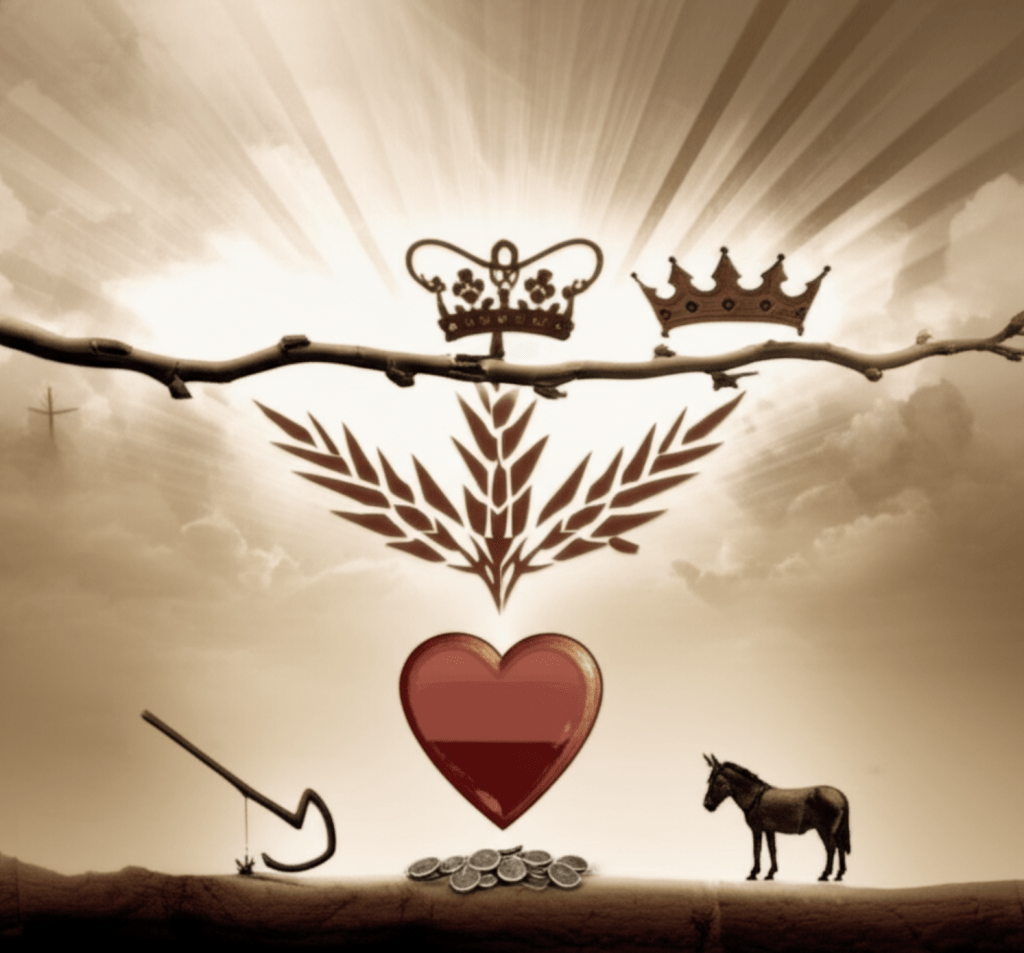
1. The Branch (Zechariah 3:8; 6:12)

  • Reference: “Behold, I will bring forth My servant the Branch.”
  • Why it points to Christ: “The Branch” is a messianic title rooted in Isaiah and Jeremiah, referring to a descendant of David who will reign in righteousness.
  • Why it matters: It affirms Jesus as the fulfillment of the Davidic covenant—both priest and king—who rebuilds the true temple (His body and the Church).

2. The Priest-King (Zechariah 6:11–13)

  • Reference: Joshua the high priest is crowned, symbolizing a union of priesthood and kingship.
  • Why it points to Christ: In Israel, these roles were separate. Christ uniquely fulfills both—He is our High Priest (Hebrews 4:14) and King (Revelation 19:16).
  • Why it matters: This foreshadows Christ’s mediating role, bridging heaven and earth, and ruling with both justice and mercy.

3. The Humble King (Zechariah 9:9)

  • Reference: “Behold, your King is coming… lowly and riding on a donkey.”
  • Why it points to Christ: Fulfilled in Jesus’ triumphal entry into Jerusalem (Matthew 21:5).
  • Why it matters: It redefines kingship—not by conquest, but by humility and peace. Christ’s kingdom is not of this world, yet it transforms it.

4. The Betrayed Shepherd (Zechariah 11:12–13)

  • Reference: “So they weighed out for my wages thirty pieces of silver… thrown to the potter.”
  • Why it points to Christ: Directly fulfilled in Judas’s betrayal and the purchase of the potter’s field (Matthew 27:9–10).
  • Why it matters: It reveals the cost of rejection and the prophetic precision of Christ’s suffering.

5. The Pierced One (Zechariah 12:10)

  • Reference: “They will look on Me whom they pierced and mourn.”
  • Why it points to Christ: Echoed in John 19:37 at the crucifixion.
  • Why it matters: It speaks to the deep sorrow and repentance that comes when we recognize the gravity of Christ’s sacrifice.

6. The Fountain for Cleansing (Zechariah 13:1)

  • Reference: “A fountain shall be opened… for sin and for uncleanness.”
  • Why it points to Christ: Symbolizes the cleansing power of His blood (Hebrews 9:14).
  • Why it matters: It underscores the heart of the gospel—redemption and purification through Christ alone.

7. The Struck Shepherd (Zechariah 13:7)

  • Reference: “Strike the shepherd, and the sheep shall be scattered.”
  • Why it points to Christ: Quoted by Jesus in Matthew 26:31 before His arrest.
  • Why it matters: It reveals the cost of leadership and the scattering of His disciples, yet also the plan of restoration.

8. The Coming Judge and King (Zechariah 14:4–9)

  • Reference: “His feet shall stand on the Mount of Olives… the Lord shall be King over all the earth.”
  • Why it points to Christ: Alludes to His second coming and reign (Acts 1:11; Revelation 11:15).
  • Why it matters: It gives hope of final victory, justice, and the restoration of all things under Christ’s lordship.

SO WHAT?
Zechariah doesn’t just predict events; He paints a theological portrait of Christ’s identity and mission. From His humble arrival to His priestly intercession, betrayal, crucifixion, and ultimate return, the book affirms that Jesus is the long-awaited Messiah. These prophecies deepen our understanding of God’s redemptive plan and strengthen our confidence in Scripture’s unity and reliability.

They also remind us that Christ’s work is holistic: He cleanses, reigns, suffers, restores, and returns. For believers, Zechariah is not just history. It’s a call to worship, to trust, and to prepare for the King who came and is coming again.

The Offense of the Cross is REAL

I recently had a conversation about Doug Wilson, and the CNN article and video about his expanding into Washington DC. The conversation revolved around how abrasive he came across in the article. Sure, CNN was trying to spin him in a bad light, but he was not saying anything that should have been shocking to Christians, but the reporter certainly was stunned more than once by what he was saying.

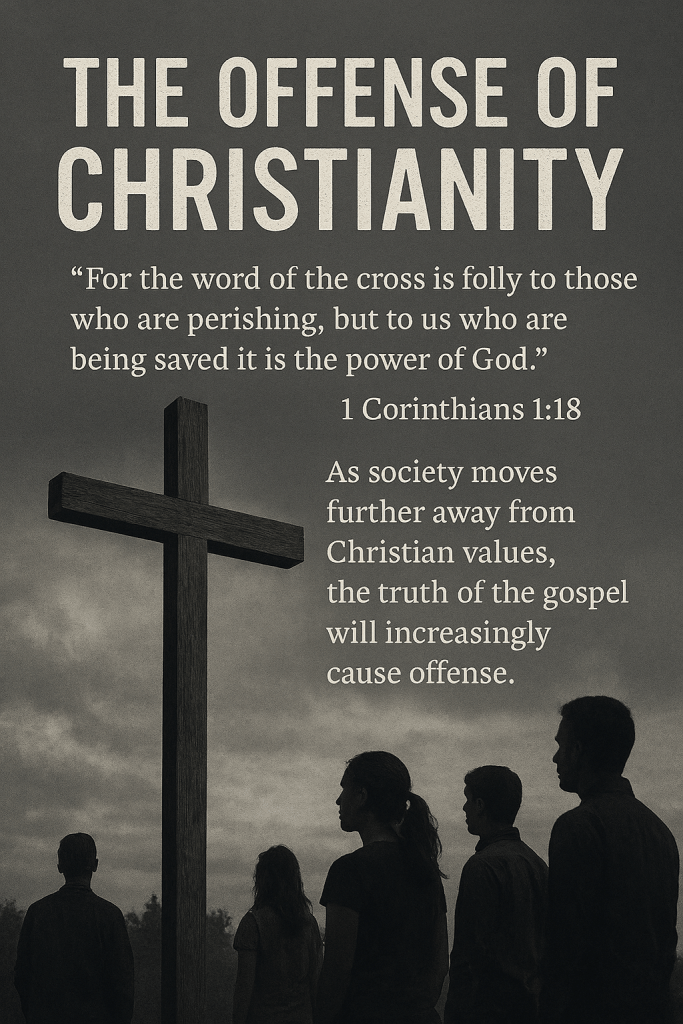
That got me thinking. As society pulls further and further away from Christian Values, holding those values up in public is going to cause greater and greater offense.

I did a search on my Logos app for references in the writings of Paul, Peter, and John for warnings about this. It brought up a host of verses, and a few of them are posted here. These stalwart men indeed encountered this situation with society and offense, and they offered us advice to prepare for it.

BUT… not to hold back so as to NOT cause that offense.

1 Corinthians 1:18 – Paul on the “offense” of the gospel
“For the message of the cross is foolishness to those who are perishing, but to us who are being saved it is the power of God.”

Paul recognizes that the gospel doesn’t always make sense to the world—it confronts pride, self-sufficiency, and worldly wisdom. What believers see as life-giving truth, others may dismiss as foolish or even offensive.

Galatians 5:11 – Paul on the “offense of the cross”
“If I still preached circumcision, why am I still being persecuted? In that case the offense of the cross has been abolished.”

Here, Paul points out that the cross itself is offensive—not because it’s wrong, but because it challenges human attempts to earn righteousness. The gospel’s insistence on grace alone can provoke resistance.

2 Timothy 4:2–4 – Paul on sound doctrine being rejected
“Preach the word; be prepared in season and out of season; correct, rebuke, and encourage—with great patience and careful instruction. For the time will come when people will not tolerate sound doctrine…”

This is a clear warning that truth will not always be welcomed, and that believers must be faithful even when society drifts away from biblical values.

1 Peter 4:3–4 – Peter on being misunderstood for not joining in
“You have spent enough time in the past doing what pagans choose to do… They are surprised that you do not join them in their reckless, wild living, and they heap abuse on you.”

Peter acknowledges that living differently will provoke misunderstanding and even hostility, but he encourages believers to stay the course.

John 15:18–19 – Jesus (quoted by John) on being hated by the world
“If the world hates you, keep in mind that it hated me first… You do not belong to the world, but I have chosen you out of the world.”

John echoes this in his epistles, reminding believers that being set apart will inevitably cause friction with the world’s values.

The apostles certainly did not shy away from the reality that truth can offend, especially when it challenges cultural norms. However, they also emphasized that this offense is not a failure—it’s a sign that the gospel is doing what it’s meant to do: confronting, convicting, and calling people to transformation.

Micah’s “Divine Trial”

The early chapters of the biblical book of Micah present God’s accusations against Israel and Judah in the form of a dramatic trial court narrative, often referred to as a “divine lawsuit” or “covenant lawsuit” (Hebrew: riv). This literary device amplifies the gravity of their transgressions and underscores God’s justice.

Micah develops this narrative using an intriguing and dramatic flair:

  • The Court is Convened (Micah 1:2-5; 6:1-2): The scene opens with a solemn summons, not just to Israel and Judah, but to “all you peoples” and even the “mountains and enduring foundations of the earth” as witnesses. This cosmic scope emphasizes the universal implications of God’s judgment and the undeniable evidence against His people. God himself is presented as both the prosecutor and the judge. Micah, the prophet, acts as the messenger or spokesperson for God, delivering the charges.
  • The Charges (Micah 1:5-7; 2:1-2, 6-8; 3:1-3, 5-7): Micah meticulously lays out the specific accusations against both the Northern Kingdom (Samaria) and the Southern Kingdom (Judah). These charges are rooted in their blatant violation of the covenant established with God. Key accusations include:
    • Idolatry: Worshiping other gods and setting up pagan shrines (Micah 1:7).
    • Social Injustice: This is a major theme, with Micah condemning the powerful elite for exploiting the poor, stealing land, and perverting justice (Micah 2:1-2; 3:1-3). He speaks of rulers who “hate good and love evil,” and who “devour my people’s flesh” (Micah 3:2-3).
    • Corrupt Leadership: Both political and religious leaders are indicted. Prophets are accused of prophesying for money and telling people what they want to hear, rather than God’s truth (Micah 2:6-8; 3:5-7). Judges accept bribes and lawyers twist the law.
    • Religious Hypocrisy: Performing rituals and sacrifices without genuine repentance or a commitment to justice (Micah 6:6-7).
  • God’s Defense (Micah 6:3-5): In a powerful rhetorical move, God challenges Israel to present any wrongdoing on His part. He recites His past acts of faithfulness and deliverance, reminding them of how He brought them out of Egypt, provided leaders like Moses, Aaron, and Miriam, and protected them from enemies like Balak and Balaam. This serves to highlight Israel’s ingratitude and underscore that their current predicament is a direct result of their own actions, not God’s failure.
  • The People’s Response (Micah 6:6-7): The people, seemingly caught in the courtroom, offer a desperate response, asking what costly sacrifices they could offer to appease God—burnt offerings, calves, thousands of rams, or even their firstborn. This response reveals their misunderstanding of God’s true desires, focusing on external rituals rather than internal righteousness and ethical behavior.
  • The Verdict and Sentence (Implicit and Explicit): While not always a direct “guilty” verdict in these early chapters, the impending judgment serves as the clear consequence. Micah prophesies destruction for Samaria and Jerusalem, exile for the people, and the breakdown of society. This is the just outcome of their unfaithfulness. However, even within the judgment, there is an implicit call to repentance and the underlying promise of a remnant that God will preserve.

This trial court imagery allows Micah to powerfully communicate God’s righteous anger, the depth of Israel’s sin, and the undeniable justice of the impending judgment. It underscores that God’s actions are not arbitrary, but a logical and deserved response to His people’s covenant violations.

A quick look at MICAH: The Remnant Will Continue

The Biblical book of Micah was written by the prophet Micah, who prophesied during the reigns of Judean kings Jotham, Ahaz, and Hezekiah, approximately between 735 and 700 BC. His audience was primarily the Jewish people in Judea, particularly focusing on the capital cities of Samaria (Northern Kingdom, before its fall) and Jerusalem (Southern Kingdom). This was a time of moral decline, social injustice, idolatry, and increasing threats from the Assyrian Empire.

Micah begins with a “lawsuit” from God against Israel and Judah for their sins. He condemns rampant social injustice, including the oppression of the poor, corrupt leadership (religious, political, and judicial), and widespread idolatry. He announces impending judgment, which would involve the destruction of cities like Samaria and Jerusalem and the exile of the people. This judgment is presented as a consequence of their covenant unfaithfulness and rebellion against God’s requirements to act justly, love mercy, and walk humbly with Him (Micah 6:8).

However, amidst these pronouncements of judgment, Micah consistently interweaves messages of hope and the promise of a faithful “remnant.” This remnant is a recurring theme, representing those who survive the calamity of judgment and maintain faithfulness to God. Micah prophesies that despite the desolation, God will preserve a portion of His people. This remnant will be gathered, restored, and transformed.

Key prophecies concerning the remnant include:

  • Gathering and Restoration: Micah foretells that the “remnant of Jacob” will be gathered back (Micah 2:12-13; 7:18-20), even after being sent into exile (Micah 4:10). This restoration is a testament to God’s steadfast love and faithfulness to His promises.
  • Messianic Hope: The remnant’s future is closely tied to the coming of a new, righteous Shepherd-King who will come from Bethlehem (Micah 5:2-5a). This leader, whose origins are “from of old, from ancient times,” will gather and deliver God’s people, establishing a peaceful and secure kingdom where nations will come to Zion to learn of the true Lord (Micah 4:1-5).
  • Divine Purpose: The existence of a remnant highlights God’s sovereign grace and His unfailing purpose. Even when the collective body of Israel falls into apostasy, God will ensure that a faithful few remain, through whom He will continue to work out His plan for redemption and blessing, not only for Israel but for all nations.
  • God’s Mercy and Forgiveness: The book concludes with a powerful expression of God’s character as one who delights in showing mercy and forgiving the transgressions of the remnant of His inheritance, emphasizing that His covenant love and promise are stronger than human evil (Micah 7:18-20).

In essence, Micah presents a dynamic interplay between inevitable judgment for sin and the enduring hope of a remnant that God will preserve, purify, and use to fulfill His ultimate redemptive purposes through a coming Messiah.

Psalm 91:1 – Secret Places

Psalms 91:1
He who dwells in the secret place of the Most High Will abide in the shadow of the Almighty.

A classic.
A favorite.

I love “secret place of the Most High.” in Hebrew, it is the MISTAR ELYON (intimate location), a place where barriers are removed, where distractions are minimized, where nothing else matters.

That the CREATOR of everything would join me in such a place is mind-blowing.

It could be a closet, a chair, a particular park bench… or a place within. Someplace it is just YOU and GOD.

We are told that those who spend time there enjoy the “shadow of the All Mighty.”
Protection.
Comfort.
Security.

Looking to abide in the SHADOW OF THE ALL MIGHTY.

Isiah 54:13 – Father’s Day

Happy Father’s Day!

Isiah 54:13
“All your sons will be taught of the LORD; And the well-be ing of your sons will be great.

I’m a dad of two great boys.
I embrace and delight in that role.

I never really “got” this until I was a dad myself.

But bottom line, I’m glad there is a Great Teacher/ Abba:

  • Who loves my kids…
  • Who draws them to Himself…
  • Who nurtures and protects them…

It’s my nightly prayer
It’s my comfort and hope.