
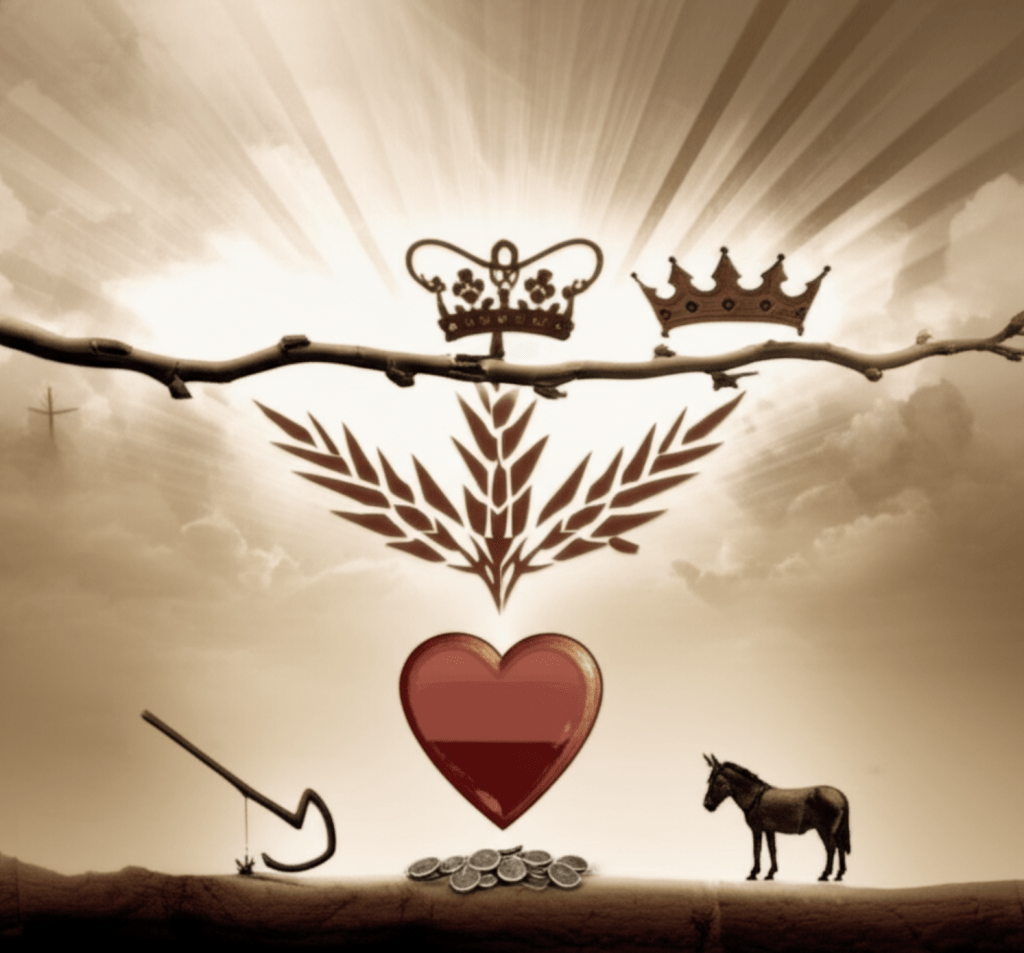
Messianic Portraits in Zechariah
1. The Branch (Zechariah 3:8; 6:12)
- Reference: “Behold, I will bring forth My servant the Branch.”
- Why it points to Christ: “The Branch” is a messianic title rooted in Isaiah and Jeremiah, referring to a descendant of David who will reign in righteousness.
- Why it matters: It affirms Jesus as the fulfillment of the Davidic covenant—both priest and king—who rebuilds the true temple (His body and the Church).
2. The Priest-King (Zechariah 6:11–13)
- Reference: Joshua the high priest is crowned, symbolizing a union of priesthood and kingship.
- Why it points to Christ: In Israel, these roles were separate. Christ uniquely fulfills both—He is our High Priest (Hebrews 4:14) and King (Revelation 19:16).
- Why it matters: This foreshadows Christ’s mediating role, bridging heaven and earth, and ruling with both justice and mercy.
3. The Humble King (Zechariah 9:9)
- Reference: “Behold, your King is coming… lowly and riding on a donkey.”
- Why it points to Christ: Fulfilled in Jesus’ triumphal entry into Jerusalem (Matthew 21:5).
- Why it matters: It redefines kingship—not by conquest, but by humility and peace. Christ’s kingdom is not of this world, yet it transforms it.
4. The Betrayed Shepherd (Zechariah 11:12–13)
- Reference: “So they weighed out for my wages thirty pieces of silver… thrown to the potter.”
- Why it points to Christ: Directly fulfilled in Judas’s betrayal and the purchase of the potter’s field (Matthew 27:9–10).
- Why it matters: It reveals the cost of rejection and the prophetic precision of Christ’s suffering.
5. The Pierced One (Zechariah 12:10)
- Reference: “They will look on Me whom they pierced and mourn.”
- Why it points to Christ: Echoed in John 19:37 at the crucifixion.
- Why it matters: It speaks to the deep sorrow and repentance that comes when we recognize the gravity of Christ’s sacrifice.
6. The Fountain for Cleansing (Zechariah 13:1)
- Reference: “A fountain shall be opened… for sin and for uncleanness.”
- Why it points to Christ: Symbolizes the cleansing power of His blood (Hebrews 9:14).
- Why it matters: It underscores the heart of the gospel—redemption and purification through Christ alone.
7. The Struck Shepherd (Zechariah 13:7)
- Reference: “Strike the shepherd, and the sheep shall be scattered.”
- Why it points to Christ: Quoted by Jesus in Matthew 26:31 before His arrest.
- Why it matters: It reveals the cost of leadership and the scattering of His disciples, yet also the plan of restoration.
8. The Coming Judge and King (Zechariah 14:4–9)
- Reference: “His feet shall stand on the Mount of Olives… the Lord shall be King over all the earth.”
- Why it points to Christ: Alludes to His second coming and reign (Acts 1:11; Revelation 11:15).
- Why it matters: It gives hope of final victory, justice, and the restoration of all things under Christ’s lordship.
SO WHAT?
Zechariah doesn’t just predict events; He paints a theological portrait of Christ’s identity and mission. From His humble arrival to His priestly intercession, betrayal, crucifixion, and ultimate return, the book affirms that Jesus is the long-awaited Messiah. These prophecies deepen our understanding of God’s redemptive plan and strengthen our confidence in Scripture’s unity and reliability.
They also remind us that Christ’s work is holistic: He cleanses, reigns, suffers, restores, and returns. For believers, Zechariah is not just history. It’s a call to worship, to trust, and to prepare for the King who came and is coming again.
 Between the Garden and the Garden City